
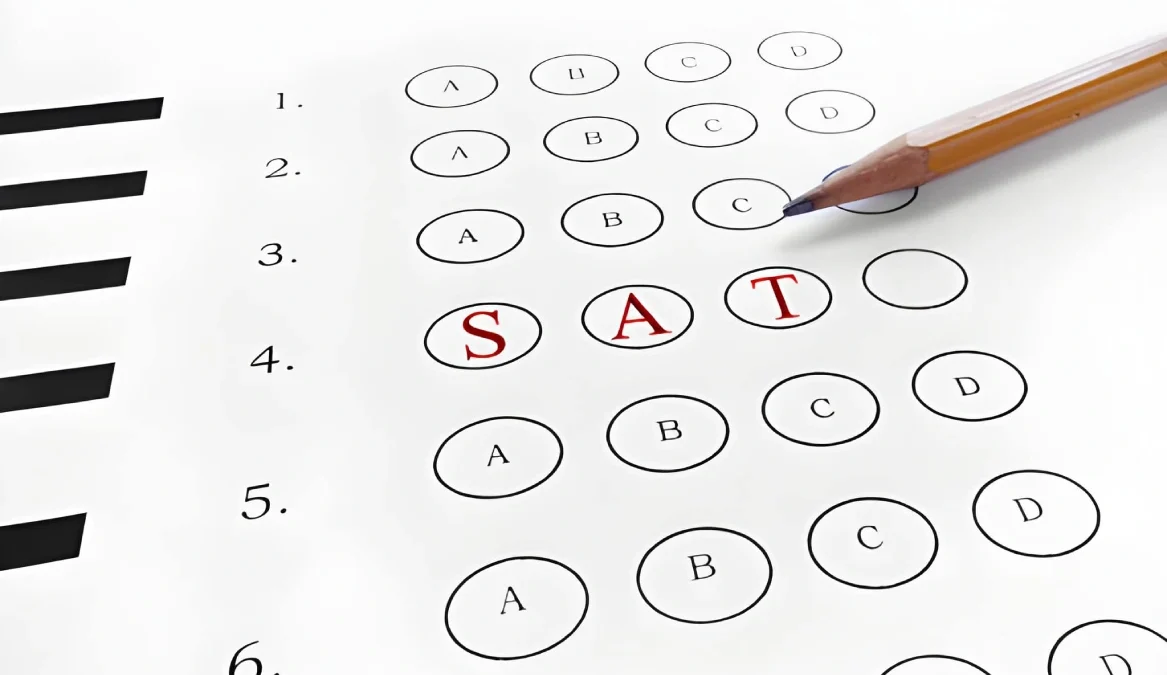
A student retakes the SAT and the score barely moves, perhaps ten points higher, perhaps a little lower. The result rarely reflects the weeks spent working through practice sets, and that gap is frustrating precisely because the effort was genuine. The typical response is to add more work: another grammar workbook, another pass through an algebra chapter that was already covered twice. In most cases, the actual issue lies elsewhere. It concerns how the preparation was structured, not how many hours were logged. A batch built around a single fixed syllabus, designed for a student who exists only in theory, tends to leave individual gaps unaddressed for months. When SAT classes skip a proper diagnostic step, this outcome follows without anyone recognizing the underlying cause.
Table of Contents
What a Repeated Score Actually Signals
When a score fails to move across two or three attempts, a specific pattern is usually at work. Whatever produced the first low result was never identified and corrected. A student may repeatedly miss the same category of grammar questions without recognizing it as a recurring gap. Alternatively, the second reading passage consumes time that should have gone toward later questions, and the pacing issue is never flagged early enough to matter. When practice sessions distribute equal attention to every topic rather than targeting where errors actually cluster, this pattern continues uninterrupted. Mock tests taken without proper review afterward compound the problem further. A score is recorded, the student proceeds to the next test, and the specific reason behind each incorrect answer remains unexamined.
Where Standard Coaching Batches Fall Short
Most SAT batches follow a single timeline for every student, regardless of individual standing. A student weak in data interpretation and a student weak in reading comprehension attend the same lesson on the same day, since the curriculum was designed for the batch rather than for either individual. Early in preparation, this arrangement works reasonably well, as foundational concepts must be taught to everyone before specialization becomes relevant. Later, when a student needs to close a specific, narrow gap, a fixed lesson plan rarely accomplishes that.
A diagnostic test changes the starting point considerably. Rather than estimating weak areas, an instructor works from actual error data: which question types are missed repeatedly, how accuracy declines as difficulty increases, and precisely where time runs out within a section. A study plan built from that information looks different for each student, even for two students placed in the same batch.
The Test Has Changed. Has the Practice Kept Pace?
One detail is frequently overlooked. The SAT adjusts itself section by section. Performance on the first module determines the difficulty of the second module, and this adjustment shapes the remaining available score range from that point forward. A considerable amount of preparation material available today does not account for this mechanism. Printed worksheets, older paper-format practice sets, and material drawn from unverified sources do not replicate how the actual adaptive exam behaves once a student sits for it.
This gap becomes evident on test day. A student who felt prepared after completing a printed worksheet can be caught off guard when the adaptive module activates, and the questions become noticeably harder than anticipated. Full-length mock tests built to mirror this adaptive structure provide a considerably more accurate picture of where a student’s score actually stands, early enough for corrective action to be still possible.
Distinguishing Features of Successful Coaching
Certain behaviors consistently lead to improved marks rather than staying at the same level. The wrong answer is discussed adequately rather than being touched up towards the end of the coaching session, so that the student can identify whether they were wrong due to a lack of understanding, careless reading, or poor time management. The professors are available between classes because a question left unresolved during one coaching session can resurface in the next session, often in a different form, making it harder for the student to understand. Testing occurs under conditions that simulate the real test experience, including adaptive modules. There is equal focus on Mathematics and Verbal.
Choosing a Format That Actually Suits the Student
Students looking for SAT coaching near me usually evaluate classroom coaching programs, live online classes, self-study programs, and private tuition. The type most suitable for a particular student would depend on how they learn, rather than on proximity alone. The classroom batches would be best for students who learn through interaction with other students and benefit from a fixed weekly schedule. Live online classes would be perfect for students who do not have a nearby coaching center and yet need a scheduled class. Self-study programs would be ideal for students with hectic school schedules who need time flexibility.
SAT coaching online in India has helped provide structured faculty training for students who cannot physically attend a nearby coaching center. What is more important than the format itself is the extent to which the coaching caters to the student’s specific weaknesses and does not follow the same track for every student, irrespective of their learning.
Conclusion
Any repetitive score stems from weak zones that weren’t identified initially, unauthentic practice material in terms of similarity to the adaptive test, and repetitive errors due to a lack of revision. Jamboree India’s SAT classes are based on diagnostic planning and section-based adaptive mock tests to provide preparation aligned with the SAT’s requirements rather than a syllabus designed for a fictional student. Moreover, while studying under Jamboree India, students get immediate access to their faculty members between classes to clear any doubts, ensuring that the coaching focus remains on where the next improvement in score is expected to come from.