
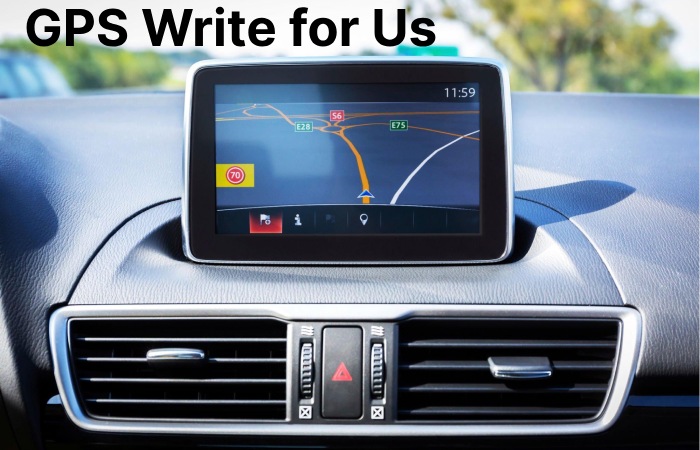
GPS Write for Us
Global positioning system or GPS initially referred to as a radio navigation system owned by the U.S. government that used satellites, has come to mean any group of satellites that broadcast at L1, L2, and L5 carrier frequencies and apply trilateration to calculate distances precisely.
Different GPS systems, like GNSS (Global Navigation Satellite System), are available worldwide. The GNSS system categorize into four types: GPS by the U.S., GLONASS by Russia, Galileo by the E.U., and BeiDou by China. In addition, there are two regional systems, QZSS by Japan & IRNSS/NavIC by India.
What Is GPS?
GPS, or global positioning system, is radio-navigation setup based on satellite systems that send users positioning, navigation, and timing information by sending desires to an earthbound receiver. GPS was initially known as NAVSTAR and is a constellation of satellites owned by the United States. The U.S. space force operates. It was originally reserved for military use but is now available for commercial and Uscivilian use. This article gives examples of the meaning and functionality of GPS, its Importance, and its applications.
The global positioning system operates based on satellites orbiting the Earth. It consists of 31 well-placed satellites, allowing users with sensors and receivers to pinpoint the exact location when they are within sight of at least three orbiting satellites.
What does GPS Stand for?
GPS stands for global positioning system. It is a subsection of global navigation satellite systems (GNSS). It Opens a new window. It is the pioneering technology among other navigation satellite systems used today.
Why is GPS Important?
GPS is a vital technology for our society because it helps us with navigation. It’s valuable that two-thirds of the world’s population lives in areas where GPS used for navigation, and it’s become an indispensable tool for personal and commercial use.
How Does GPS Work?
GPS communicates with its components, similar to GLONASS, BeiDou, and Galileo satellites. The global positioning system (GPS) has three parts or elements. These components work together to ensure the navigation, timing, and positioning information sent across are consistently accurate. The parts are the space segment, control segment, and receivers.
- Space segment
- Control segment
- Receivers or user segment
Why Write for Webtechon – GPS Write For Us
Writing for Webtechon can expose your website to customer looking for GPS.
Webtechon’s presence is on social media, and we will share your article with the GPS -related audience.
You can reach out to GPS enthusiasts.
How to Submit Guest Post?
To Submit guest posts, please read through the guidelines mentioned below. You can contact us from this website contact@webtechon.com
Article Submission Guidelines
Please review the following requirements before submitting your article.
Original content: Articles must be original, unpublished, and written specifically for our editorial review. Previously published or duplicate content will not be accepted.
Reader value: Submit informative, accurate, and practical content that answers a clear reader question or addresses a real problem.
Research and accuracy: Support technical claims with credible sources, relevant documentation, research, or practical evidence. Cite external data and acknowledge the work of other authors.
Structure and readability: Use a clear title, descriptive headings, concise paragraphs, and examples where helpful. Include screenshots, diagrams, or code samples when they genuinely improve the explanation.
Images and media: Submit original images or media you have permission to use. Provide appropriate attribution when required.
No spam or excessive promotion: Articles must not be primarily promotional, stuffed with keywords, or written solely to obtain backlinks. Product mentions must be relevant to the topic and disclosed where appropriate.
Author biography: Include a short biography of up to 100 words describing your relevant experience. An author photograph may be included if requested by the editorial team.
External links: Include only relevant, useful references. Author or website links are subject to editorial approval and applicable search-engine link policies. Publication does not guarantee a backlink.
Editorial review: We may edit accepted submissions for grammar, clarity, structure, accuracy, and style. Substantial changes will be handled in accordance with our editorial process.